Create publication-ready visual abstracts for clinical research, systematic reviews, and medical guideline papers. Paste your abstract into Graphab's visual abstract generator — it drafts a complete figure in minutes, sized for your target journal and ready for submission or social sharing.
Open Visual Abstract Generator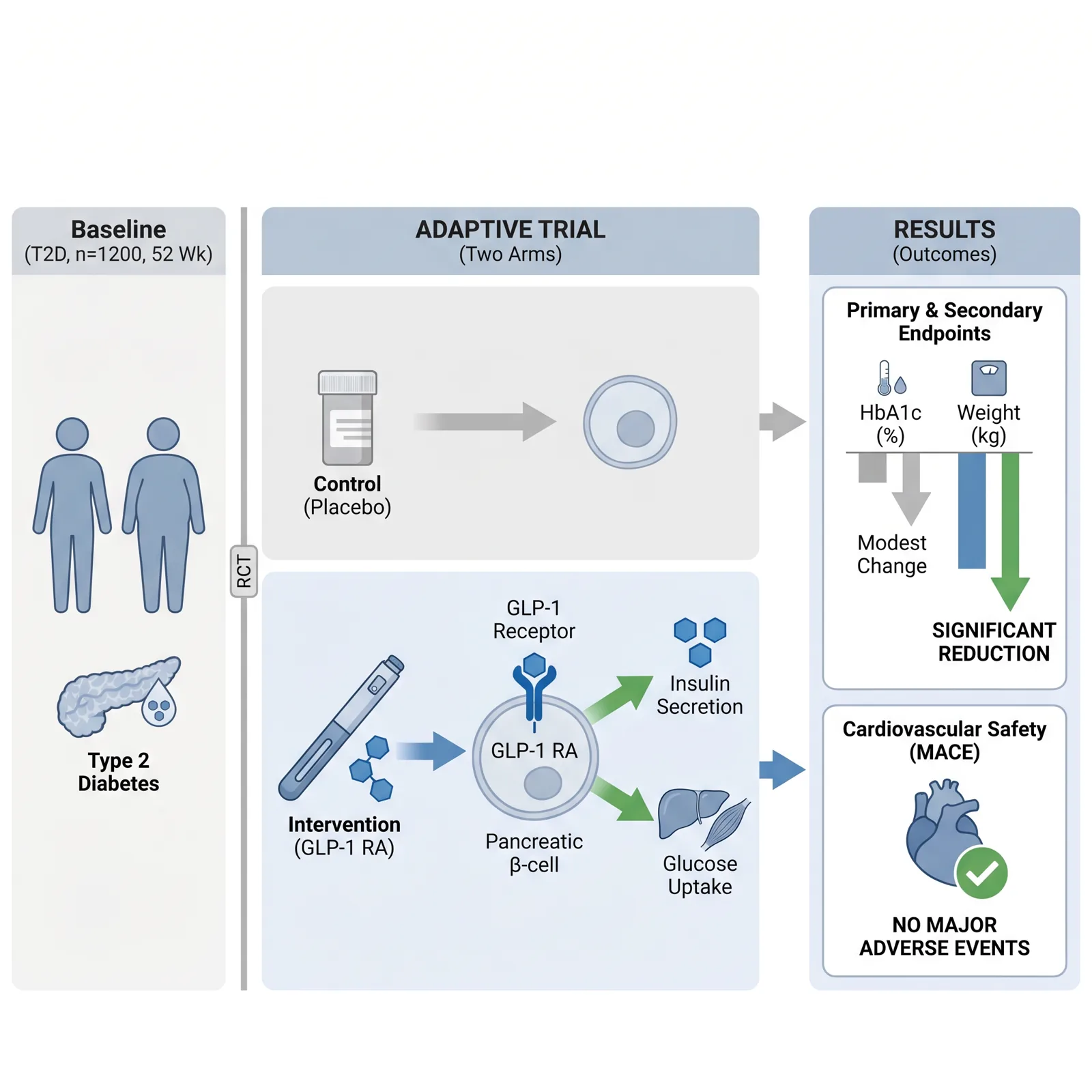
A visual abstract is a single-image, graphical summary of a research paper's key findings. Originally popularized by medical journals on social media, visual abstracts condense a study's objective, methods, results, and conclusion into a glanceable figure that readers understand in seconds — without opening the full paper.
In clinical research, visual abstracts have been shown to increase article views, citation rates, and social media engagement. Journals such as JAMA, Annals of Surgery, and many Elsevier clinical titles now encourage or request them at submission, while others — including The BMJ — commission visual abstracts in-house for selected papers.
Visual abstract and graphical abstract refer to the same concept. The term visual abstract is more common in medical and clinical contexts — especially for social media and tweetorials — while graphical abstract is the term used by Elsevier, Cell Press, and most STM journals in their author guidelines. Graphab supports both: the same templates, tools, and export formats work for either.
Choose your journal from Graphab's preset library — JAMA, BMJ, Annals of Surgery, or any Elsevier clinical title. The visual abstract canvas loads a preset sized to that journal's published guidance — dimensions, DPI, and color space — which you can adjust as needed.
Copy your structured abstract (Background, Methods, Results, Conclusion) into the visual abstract generator. Graphab's AI reads your text and drafts a visual abstract layout — no prompting or design skills needed.
Drag and drop your actual figures into the visual abstract. Adjust labels, colors, and zone sizes. The editor enforces journal-appropriate typography and spacing so your visual abstract looks professional.
Download your visual abstract as TIFF, PDF, or EPS for journal submission, or grab a web-optimized PNG for Twitter and LinkedIn. Each format exports at the resolution set by your selected journal preset.
Show your trial design, intervention groups, primary endpoints, and key results in a single visual abstract. Ideal for NEJM, JAMA, and The Lancet trial reports.
Summarize your search strategy, included studies, forest plot findings, and main conclusion in one glanceable visual abstract. Perfect for BMJ and Cochrane review publications.
Distill recommendation strength, evidence levels, and key action points into a clear visual abstract for guideline publications in Annals of Surgery and specialty journals.
Present the patient timeline, diagnostic findings, intervention, and outcomes in a chronological visual abstract — ideal for BMJ Case Reports and clinical case conferences.
Every journal sets its own requirements for visual abstract dimensions, resolution, and file format, and these specs differ widely between titles. As a rough guide, medical journals often call for a 300 DPI figure in a square or landscape layout — for example, square formats around 1200×1200 px or landscape formats near 1328×531 px are common — exported as TIFF, PDF, or EPS. Treat these as illustrative starting points and confirm the exact numbers in your target journal's current author guidelines.
When you select a target journal, Graphab pre-configures the visual abstract canvas with a matching preset, and the export dialog shows the dimensions, DPI, and color space you're exporting at — so you can check them against your journal's guidelines before you submit.
Always verify your final visual abstract against your target journal's current author guidelines before submitting. Specifications can change between revision cycles.
Paste your paper abstract and let Graphab's AI generate a journal-ready visual abstract in minutes. Free to start — no credit card required.
Open Visual Abstract Generator